Published on January 21, 2026
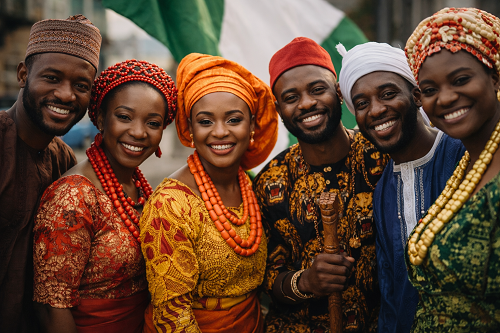
Ethnicity is a conundrum that relatively influences the perspective and practice of Nigerians in all spheres of human existence: “we Yorubas and those Hausas, we Igbos and those Fulanis; such conceptualizations take place in many social, political and economic situations, and they help to maintain and structure the boundaries of culture and interaction.
Despite changes that have taken place since European colonisation, Mercier (1986: 14) maintained that: “the boundaries between ethnic groups have been able to retain or assume great significance”. It affects where one lives, with whom one associates, for whom one votes, at what occupation one works and so forth. Although the enclaves may be geographic realities, it is of great concern that they are behavioural realities.
The nature of European scramble for Africa and its subsequent partition among European countries have had serious consequences for the independent states of the continent. The artificial boundaries of the states, which emerged from the European imperial expansion, have salient implications for political development in these states. After independence, one saw the Hausa of Nigeria with members of their family living as citizens of Niger Republic. The Ewes are split between Ghana and Togo; Yorubas are found across the borders of Nigeria and Republic of Benin; the Somalis found themselves in Kenya, Somalia and Ethiopia; and the same goes for the Massai in Tanzania and Kenya.
It is therefore not surprising that peaceful coexistence and harmony in most African countries have been punctuated by irredentist movements. These artificial boundaries created culturally diverse states as they brought together strange ethno-cultural groups into one political territory. The problem of integration arising from these have been amply demonstrated by communal/religious instability and/or secessionist bids in the Sudan, Rwanda, Zaire, Burundi, Zanzibar, Uganda, Nigeria, the Chad and Angola.
Elaigwu (1994), distinguished between an ethnic group (what some refer to as “tribe”) and ethnicity (called “tribalism” by others). An ethnic group, according to him, is a group of people linked by common bonds of kinship. In some cases, it has identifiable language, social, economic and cultural traits as well as distinct territory. As can be seen, this definition uses mainly objective criteria. But an ethnic group has meaning to the individual only if he identifies with it as a basis for his "primordial social identity".
Given the objective factors aforementioned, it is no wonder that groups form images and stereotypes of one another in the process of interaction. At times when the channels of communication become clogged, "autistic hostility" may ensue as distrust is reinforced by misperceptions based on faulty communication. In such a situation, group A not only becomes keenly aware of itself as a group distinct from group B (ethnic consciousness) but also acts out the feeling of attachment and loyalty of its members in interaction with group B when the interests of both groups intersect over the same values and scarce social goods (ethnicity). Thus, ethnicity is ethnic consciousness "acted out" in relations with other individuals and groups to maximize gains in situation of conflicting interests and claims over scarce resources (i.e., values, statuses, and/or goods).
Ethnic consciousness is not detrimental to peaceful coexistence and harmony in a nation state. In fact, it can be argued that every individual needs this form of consciousness for his/her own identity. The fact that I am Mwaghavul, Hausa, Yoruba, Igbo, English, Welsh or Walloon is a basic fact of identity for me. It is also difficult, if not impossible, to transfer this identity or replace it with another one, especially in one‟s adulthood. It can, of course, be easily exploited by competing elites or politicians for other purposes. When highly notable Nigerians like Obafemi Owolowo, goes to take a chieftaincy title in his village, he is responding to the deculturalising aspect of modernisation as he seeks identification with his cultural obligations and rights among his own group, it is only a demonstration of ethnic consciousness. On the other hand, ethnicity is ethnic consciousness transformed into a weapon of offence or defence in a competitive process in relations with other groups over desired scarce resources. This could lead to the mobilisation of ethnic bedfellows in order to maximize gains at the expense of other competing groups.
While ethnicity may create numerous problems for the central elite, a poly-ethnic state has relatively less tasks than a multinational state. For our purpose, a poly-ethnic state refers to those states which have many small ethnic groups, none of which lays claim to sub-national autonomy enough to challenge self-determination. No ethnic group in such states regards itself as a nation. Thus, Tanzania, Senegal, Gambia, Guinea and Congo (Brazzaville) illustrate poly-ethnic states in Africa. On the other hand, a multinational state comprises ethnic groups which not only vary in size but also in the distribution of power, influence and resources. Such state is marked by aggressive ethnic nationalism as various groups push for national self-determination. Often their demand for sub-national self-determination directly challenges the centre's demand for national self-determination: Nigeria (Igbo, Yoruba, Hausa), Zaire (the Kongo, Mongo, Luba, and Kivu ethnic types), the Chad (the Arab, and Sudanese types) illustrate multinational states in Africa. It is our contention that problems for peaceful coexistence are less intractable in poly-ethnic states than in multinational states.
Like most developed countries, African states face difficult and simultaneous challenges of political development and the strategies adopted for coping with these challenges are in part, products of their colonial experience. While federalism is a mechanism for effecting desirable compromises in a multinational state, it is embedded with its own seeds of discord. Most African states have problems emanating from poly-ethnicity and religious differences. However, in most of these states, the necessity for the consolidation of the fragile state overrides demands for the satisfaction of sub-national self-determination; thus, "mobilisational" techniques and structures have been more acceptable to African leaders, except in aggressively multinational states.
The perception of an ethnic group by another whether real or imagined, breeds disaffection and distrust which, in some cases, ignite violent conflicts at the slightest provocation. For instance, “Serbs see themselves as heroic defenders of Europe and they see Croats as belligerent thugs; Croats see themselves as valiant victims of oppression and Serbs as congenial oppressors. Under such circumstances, the slightest provocation from either side simply confirms deeply held system of belief and provides the justification for a retaliatory response.” (Brown, 2004: 67).
Given the heightened distrust and mutual suspicion between Nigerians along religious and ethnic divide, it becomes an uphill task for social integration to thrive. Though marriage and commerce have seemingly broken the wall of disconnect between most of the various divisions that exist, a big gulf remains in the integration of ethnic nationalities of the county.
No comments yet. Be the first!
Leave a Comment